
Flue Liner Damage
Cracked, missing, or displaced clay flue tiles can expose surrounding materials to heat and combustion byproducts. Metal liners may show corrosion, separation, or installation concerns.
Serving Hackensack, New Jersey & surrounding areas
Mon–Fri 8am–6pm · Sat 9am–2pm
Get a clear assessment of visible chimney conditions, likely safety concerns, and the next steps needed to keep the system in sound working order.
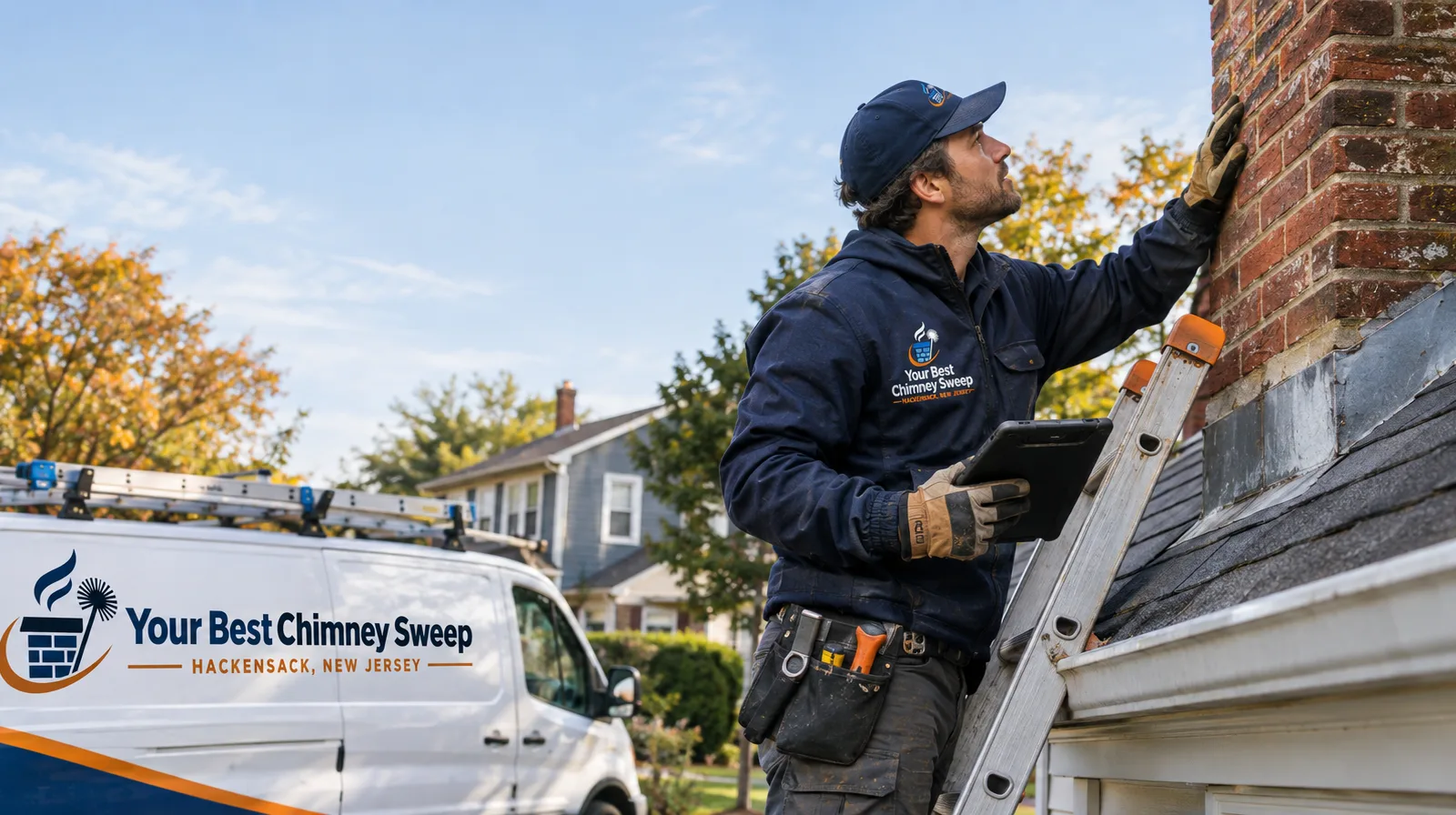
A professional chimney inspection in Hackensack helps identify conditions that are easy to miss from the ground, including damaged mortar joints, cracked flue tiles, loose components, moisture entry, and obstructions. Your Best Chimney Sweep examines accessible portions of the chimney and explains what the findings mean in practical terms.
During every inspection, Hackensack's local chimney sweeping service treats the visit as fact-finding rather than assuming work is required. The goal is to separate routine upkeep from conditions that need prompt attention. You receive a clear account of accessible defects, limitations, and reasonable next steps.
Hackensack has a mix of detached houses, multifamily properties, and commercial buildings, so chimney access and construction can vary considerably. Homes near Fairmount may have older masonry assemblies, while properties around the Prospect Avenue corridor can involve taller structures or shared building systems. Each of those conditions affects how an inspection is planned and which areas can be viewed safely.
The inspection starts with the readily accessible exterior and interior portions of the system. On the outside, the specialist looks at the chimney crown, cap, flashing, exposed masonry, mortar joints, and signs of movement or water entry. Interior observations may include the firebox, damper area, smoke chamber, and visible flue surfaces, depending on the appliance and access.
An inspection also considers whether soot, creosote, nesting material, or debris may be restricting the flue. Creosote is a combustible byproduct of wood burning. Its presence, amount, and form can affect recommendations. Gas and oil appliances have different venting concerns, including deterioration caused by acidic condensate and problems at appliance connectors.
Accessible clearances and components are compared with accepted safety practices, but an inspection is not destructive unless a more advanced scope is specifically authorized. Hidden framing, concealed flue surfaces, and inaccessible roof areas cannot be assessed through ordinary visual observation. Those limits should be stated plainly in the findings.
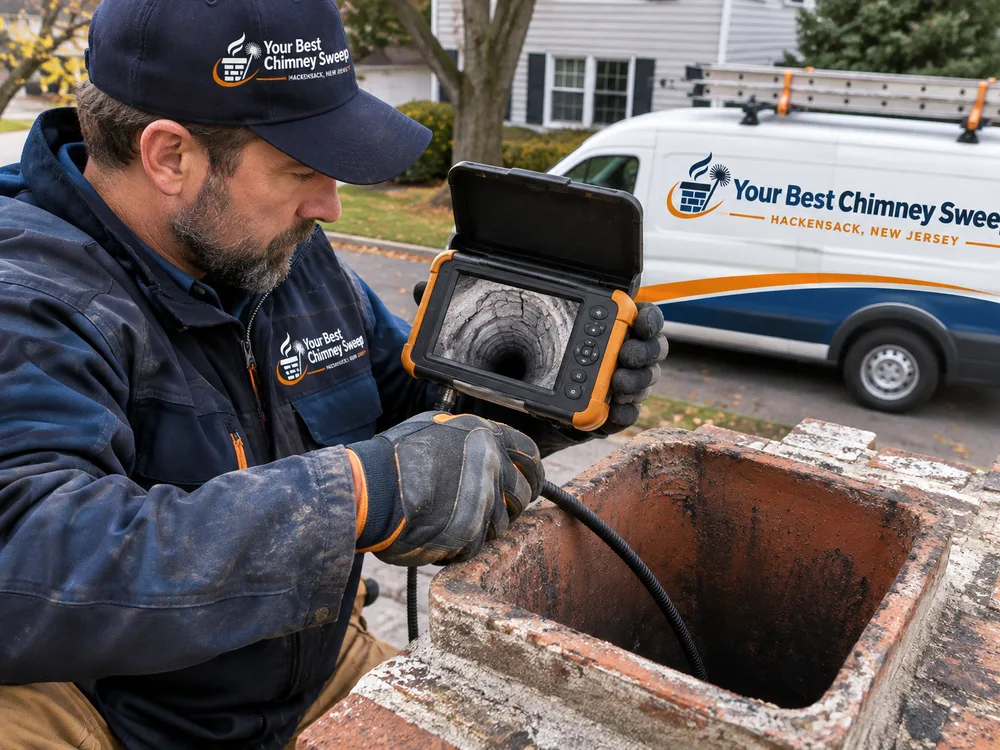
Cracked, missing, or displaced clay flue tiles can expose surrounding materials to heat and combustion byproducts. Metal liners may show corrosion, separation, or installation concerns.
A deteriorated crown, failed flashing, missing cap, or open mortar joint can admit water. Freeze and thaw cycles common in North Jersey can worsen existing masonry cracks.
Creosote, soot, leaves, animal nesting material, and damaged liner pieces may reduce the usable flue area or interfere with proper venting.
Open mortar joints, damaged firebrick, and deteriorated smoke chamber surfaces may require attention before continued fireplace use.
Spalling brick, eroded mortar, leaning sections, or loose material may indicate prolonged moisture exposure or structural movement.
Improper connections, visible gaps, corrosion, or signs of poor draft may warrant correction or further evaluation by the appropriate qualified trade.
Industry practice generally recognizes three inspection levels. The appropriate level depends on what has changed, what is visible, and whether a suspected hazard needs further investigation.
A Level 1 inspection is generally suited to a chimney under continued use with the same appliance and no reported performance changes. It covers readily accessible portions of the chimney, venting system, and connected appliance.
A Level 2 inspection adds accessible areas such as attics, crawl spaces, and basements when applicable, along with video scanning or a comparable examination of the flue interior. It is commonly appropriate after a chimney fire, when an appliance or fuel type changes, after significant weather damage, or during a property transfer.
A Level 3 inspection is reserved for cases where a serious concealed hazard is suspected and cannot be confirmed through the first two levels. It can involve removing limited building materials or chimney components to reach the area in question. That work requires advance discussion and authorization because it is invasive.
The inspection level should match the circumstances. A camera scan can provide valuable evidence, but it does not replace access to exterior masonry, connectors, or concealed spaces when those areas are relevant.
The visit begins with questions about the connected appliance, fuel type, recent changes, odors, smoke entry, water staining, prior chimney fires, and any documents available from earlier work.
The specialist examines visible areas around the appliance or fireplace, including the firebox, damper, smoke chamber, connector, and flue opening where applicable.
Accessible masonry, mortar, crown, cap, flashing, and roofline conditions are checked. Safe access depends on roof pitch, weather, height, and the condition of walking surfaces.
When the inspection scope calls for it, camera equipment is used to look for cracked tiles, gaps, deposits, obstructions, corrosion, and other internal conditions.
Observed concerns are described in plain language, with distinctions between maintenance, recommended correction, and conditions that may make continued use unsafe pending repair.
Arrange an inspection when buying a property, changing a heating appliance, returning a fireplace to use after a long gap, or noticing smoke, unusual odors, falling masonry fragments, or water near the chimney. An inspection is also appropriate after a suspected chimney fire or a severe event that may have damaged the structure.
Annual inspection is widely recommended for chimneys, fireplaces, and venting systems. Inspection and cleaning are separate decisions. A chimney may need assessment even when deposits are light, while cleaning is recommended when accumulation or blockage warrants removal.
Timing matters in Bergen County. Scheduling before regular cold-weather use leaves more opportunity to address defects before the heating season. Exterior inspection may need to be postponed during rain, ice, strong wind, or unsafe roof conditions. Interior observations can still be useful, but the final assessment should account for any inaccessible area.
A chimney inspection in Hackensack typically costs about $150 to $350 for a basic visual assessment, while a Level 2 inspection with a flue camera often ranges from $300 to $700. Complex or invasive Level 3 work can cost more. Final pricing depends on chimney height, roof access, the number of flues, appliance type, inspection level, and whether deposits prevent a clear view. Cleaning or repair is separate unless included in a written scope. The exact cost is confirmed after the chimney configuration and requested inspection level are reviewed.
Book Your Free InspectionAnswers about inspection levels, timing, access, cleaning, weather, findings, and appointment preparation.
A straightforward inspection commonly takes about 45 to 90 minutes, while camera work, multiple flues, or difficult access can extend the visit. Taller multifamily buildings and properties along denser Hackensack streets may require added planning for safe exterior access.
A Level 2 inspection is generally appropriate during a property transfer because it includes examination of accessible areas and a scan of the flue interior. A general home inspection may note visible chimney concerns, but it does not usually provide the same chimney-specific evaluation.
An inspection does not automatically include cleaning unless that work is part of the agreed scope. If soot, creosote, or debris blocks the view, cleaning may be recommended before the flue can be assessed properly.
Yes, many chimney inspections can be completed during winter, but snow, ice, rain, high wind, or a wet roof may prevent safe exterior access. North Jersey freeze and thaw conditions also make winter masonry defects worth documenting, even if a closer roof-level check must wait for safer weather.
Yes, stop using the appliance until the cause has been evaluated if smoke or combustion odors are entering occupied rooms. Draft problems, blockage, flue damage, pressure differences, or connector defects may be involved, and carbon monoxide alarms are not a substitute for correcting the source.
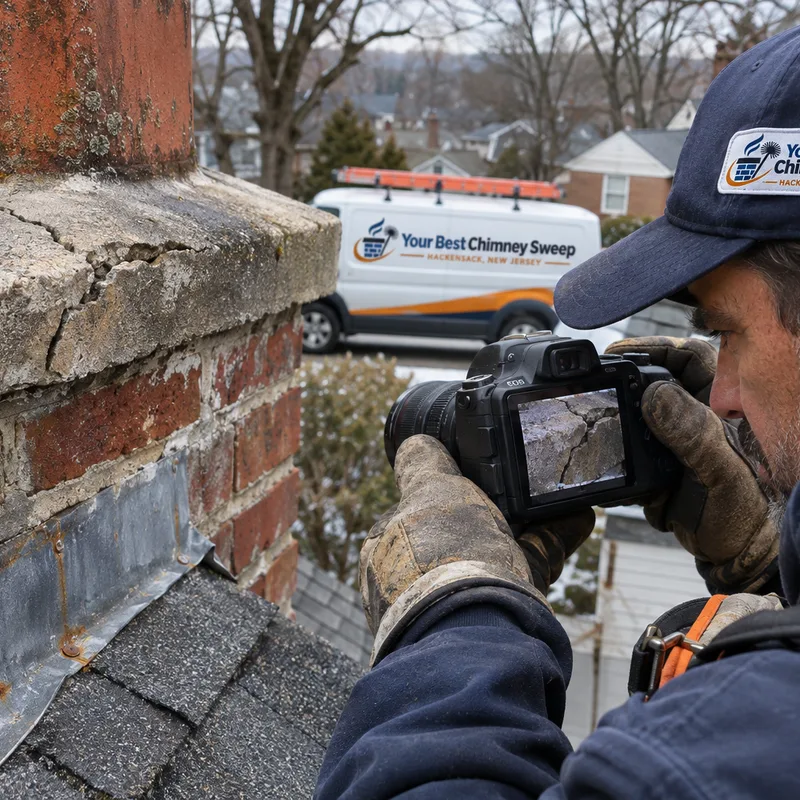
Yes, the findings should identify observed conditions, inaccessible areas, and recommended priorities. Photos or camera images can be especially useful when documenting cracked flue tiles, obstructions, damaged crowns, or deteriorated mortar.
Yes, multiple flues can be inspected, but each should be considered separately because it may serve a different fireplace, boiler, furnace, or water heater. Pricing and visit length depend on the number of flues and the access required.
Stop using the connected fireplace or appliance early enough for it to cool completely, clear personal items from the work area, and provide access to relevant basements, attics, utility spaces, or fireplaces. Prior reports and details about appliance changes can help the specialist select the proper inspection level.
Tell Your Best Chimney Sweep about the property, connected appliance, and any signs you have noticed. We will help determine the appropriate inspection scope and give you a clear plan for the next step.